🚀 Now Live: You Might Be Solving the Wrong Problem with Lindsey
When a client says “I just need a logo,” what’s the real problem hiding underneath? ✨


T H E G L I T C H E D I T I O N
T H E I N T E R V I E W
In our latest feature of The Glitch Edition, we sit down with Lindsey Beharry , brand designer and founder of her own design studio, to explore why a lasting brand begins with a person rather than a persona, and why design without strategy is just decoration. From the $5k agency brochure bill that sparked her leap into business to the red flags she learned to trust her gut about, Lindsey shares an honest look at self-doubt disguised as “weighing your options,” and why a business plan is only a hypothesis. If your plan has fallen apart, she has a message for you. 🚀

Aparajita Srivastava: What led you to start your design studio?
Lindsey Beharry: I’ve known I wanted to work for myself since shortly after graduating college, but I wasn’t sure in what capacity. I spent 10+ years exploring my interests in writing, publishing, marketing, branding, and design, while also freelancing on the side.
My aha moment came when I was working as a marketing manager. My boss assigned me to collaborate with a marketing agency to create a new company brochure, and when the bill for $5k came, I thought, I could have made that. I joked that I should start a business and sell my company my services for cheaper.
I laughed. My boss laughed. But I couldn’t get the idea out of my head.
I spent the next few years learning the business side of marketing. Eventually, a leadership changeover made me pause and reconsider what I wanted. I realized I already had everything I needed to work for myself, so I took the leap.
That company became my first client.
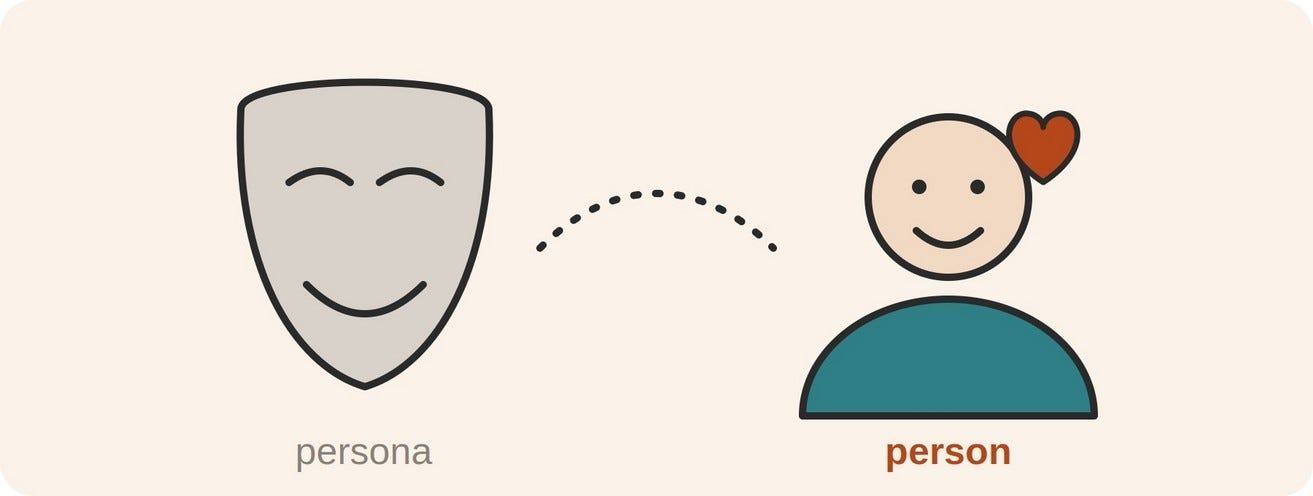
Aparajita Srivastava: You argue that a lasting brand begins with a person, not a persona. How do you help a client find that person?
Lindsey Beharry: The person already exists. And their experiences, ideas, opinions, and values have tremendous power to connect them with people they can genuinely help.
The problem is, they often cover that up with a version of themselves they think a professional brand requires. They want to appear confident and authoritative, so they quote the same corporate blah-blah everyone else does: we empower, we innovate, we synergize. It sounds polished and professional.
It’s also boring and meaningless.
The reality is a business is just real people helping other real people. So my job is to uncover whatever is getting in the way of that. I ask questions that, on the surface, seem to have little to do with branding: What irks you about other businesses? Who would your business be if it were a person? And the most important question: Why are you building your business in the first place?
The real person is usually hiding in the details: the strong opinion, the story they almost didn’t tell me, the thing they do differently without even realizing it’s different. Those are the connective tissues that create a persona that feels human. That’s the stuff people connect with.
Aparajita Srivastava: Business owners are told to define the ideal client and the perfect persona first. What glitch in that advice do you see most?
Lindsey Beharry: I think we sometimes use the ideal-client exercise to avoid a much harder question: What am I actually trying to do, and does it honestly help people?
You can create an incredibly detailed fictional client—age, income, marital status, favorite coffee order—and still have no idea why they’d choose your business.
Understanding your audience matters. But you need a strong grasp of the problem you’re solving first. Otherwise, you only see a partial picture of your audience: you know who you’re talking to, but you don’t understand what would make them care about or choose your business.
Aparajita Srivastava: Where do designers solve a visual problem when the real problem is strategic?
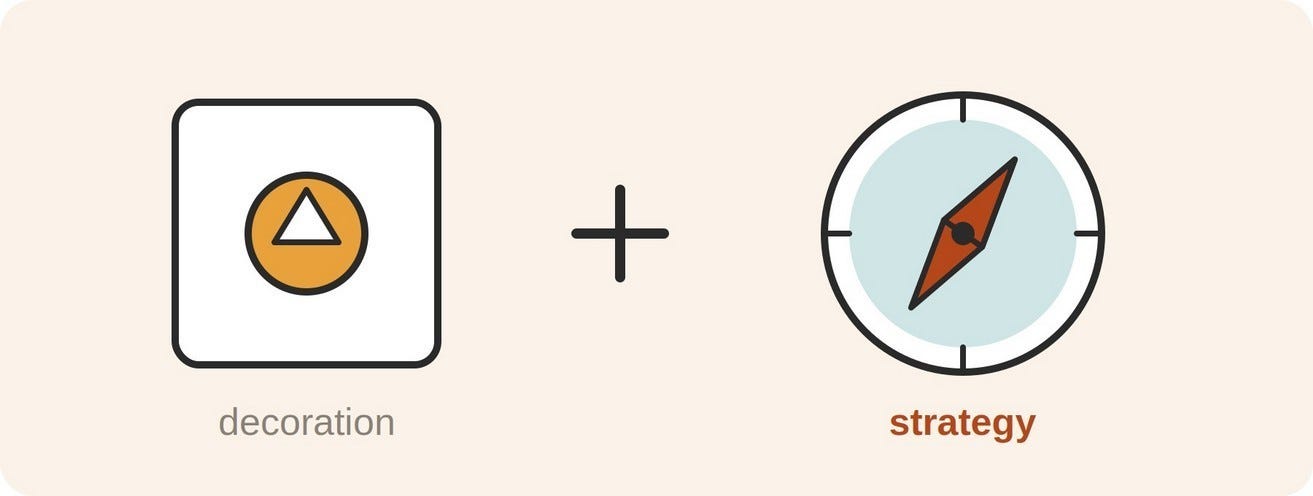
Lindsey Beharry: Ninety-nine percent of the time when someone tells me “I just need a logo,” I already know there’s a strategy problem. They know they need a logo, but they’re approaching their branding from a purely visual perspective.
You’ll often hear brand designers say “branding is more than a logo,” and there’s a reason for this: branding is always strategic. If a designer takes your logo request at face value without asking
deeper questions about your business and your audience, run. You’re about to waste your money, because design without strategy is just decoration.
Aparajita Srivastava: Tell us about a project or client relationship that fell apart. What did you change afterwards?
Lindsey Beharry: I haven’t had a project fall apart, but I did have one project where both the client and I were perfectly happy to go our separate ways when it was over.
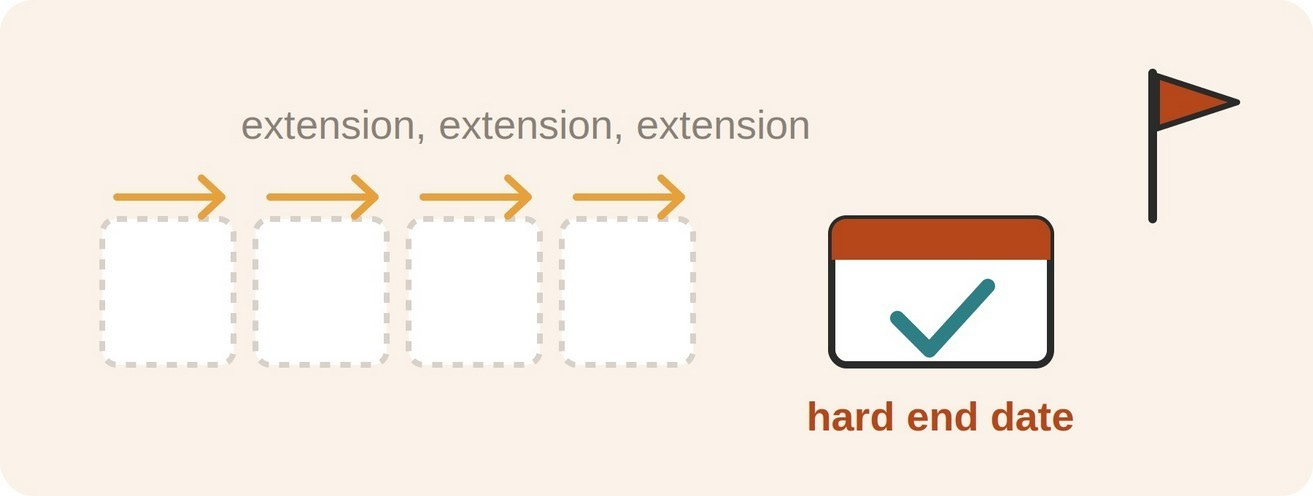
They repeatedly pushed back our launch handover meeting over the course of a few months. I finally realized they were scared to launch, which I completely empathize with—putting your work into the world is vulnerable. It’s such a common experience I even have a pre-launch pep talk built into my workflow.
After three months of extensions, my client was still stalling. So I set a hard end date and closed out the project. It was not an easy ending.
Looking back, there were red flags before the project ever started, and I ignored them. Afterward, I built myself a post-project review to fill out after working with a client. The last question was: “Would you take this person/company on as a future client, yes or no?”
It was my way of telling my future self: trust your gut.
Aparajita Srivastava: If a brand is a mirror rather than a mask, what do you do when the client does not like what it shows?
Lindsey Beharry: First, I don’t assume they’re wrong.
Sometimes they genuinely don’t like something, and that’s useful information. And sometimes they’re identifying a deeper problem they don’t even know how to articulate and attributing it to the design. That’s also useful.
Nike co-founder Phil Knight famously did not like the Nike logo, saying “I don’t love it, but maybe it will grow on me.” He realized a logo only becomes iconic as the company builds its reputation and history over time.
My job isn’t to convince someone to love my design. It’s to solve the problem we’ve identified and to create a design solution that can help build a reputation over time.
Aparajita Srivastava: What internal glitches (imposter syndrome, burnout, comparison) do you face as a founder and designer?
Lindsey Beharry: My biggest one is probably self-doubt disguised as weighing my options.
I like to understand things, be prepared, and know I’ve thought something through from every possible angle before I make a decision—the “right” decision.
That’s useful right up until it isn’t.
At a certain point, more information doesn’t give you more certainty. It just gives you 17 other things to worry about, and a really good excuse to stall. So I have to constantly work at moving before I feel ready.
Aparajita Srivastava: What message do you want to send to someone whose business plan has fallen apart?
Lindsey Beharry: You can let go of the plan. It was just a hypothesis anyway—based on what you knew when you created it.
But now you have real information.
Sometimes that’s “This isn’t working.” And sometimes it’s “Oh, this is what my audience actually wants.”
I am always tweaking my business. There are services I no longer offer today because, even though they were popular, they didn’t generate enough revenue for my time. I tweak my processes between nearly every client. My target audience has evolved. I’ve updated my branding, changed my pricing structure.
The goal was never to build a perfect plan and execute it flawlessly. The plan is just a guide. Your business is actually supposed to evolve over time. If it isn’t, are you?

Lindsey’s answers keep returning to one idea: a brand and a business begin with a real person and a real problem, and both are meant to evolve. Her message to anyone whose plan has fallen apart is that the plan was only a hypothesis, and now there is real information.
Thank you, Lindsey, for sharing your story with The Glitch Edition.
© 2026 Lindsey Beharry
📖 Check out Lindsey’s interview in The Glitch Edition! ✨
🔗 Read the full interview in the attached PDF!
drive.google.com/file/d/1MRdSHZ78qnAAcxIJdDn1fPLUNMZgtiB8/view
💬 We’d love to hear from you! What resonated with you most about Lindsey’s journey? Share your thoughts and key takeaways in the comments. What would you ask her about building a brand around a real person, solving the strategy problem behind the visual one, or letting go of a plan that isn’t working? Let’s keep the conversation going! ✨
#TheGlitchEdition #LindseyBeharry #BrandDesign #Branding #DesignStudio #SmallBusiness #BrandStrategy
Your story of the client who stalled the launch reminds me of a client who did the same with me. They were afraid to finish the book and share their autobiographical details so they kept asking for rewrites. My final payment was tied to the book being done. I ended up hiring a lawyer to write a threatening letter and I received half of the final payment. The experience also prodded me to change my payment structure so I was not vulnerable in that way again. Thanks for sharing your story.
Very helpful interview. Got many dimensions